

 See My Latest Article on HelloNation
A chipped or broken tooth is often frightening, but the right first steps can reduce pain, protect the tooth, and help prevent further damage. The urgency depends on how much tooth was lost, whether the inner nerve is exposed, and whether the injury involved the jaw, gums, or face.
What should you do immediately after breaking a tooth?
Rinse the mouth gently with lukewarm water, then look for bleeding, swelling, or a loose piece of tooth. Avoid chewing on the injured side and protect any sharp edge from cutting the tongue or cheek.
Useful first steps include:
- Rinse away food and debris without scrubbing the broken area.
- Apply gentle pressure with clean gauze if the gums are bleeding.
- Use a cold compress against the outside of the cheek if swelling develops.
- Save any tooth fragment in a clean container with milk or saliva.
- Avoid biting hard foods, ice, pens, fingernails, or other objects.
- Do not place aspirin directly on the tooth or gums, because it can irritate or burn soft tissue.
A pharmacy dental repair material may temporarily cover a sharp edge, but it does not repair the tooth. Avoid using household glue or attempting to reattach the fragment.
Is a chipped tooth a dental emergency?
A small chip without pain, bleeding, swelling, or looseness is usually not a medical emergency, but it still deserves dental evaluation. A minor-looking fracture can enlarge, expose a deeper layer of the tooth, or leave an edge that repeatedly cuts the tongue.
Urgent dental care is more appropriate when:
- The tooth is painful, especially with throbbing or pain that does not settle.
- The tooth is loose, displaced, or partly detached.
- A large portion of the tooth has broken away.
- The center of the tooth appears pink, red, or dark.
- Bleeding continues despite steady pressure.
- The gums, lips, or face are significantly swollen.
- The injury resulted from a blow to the face or head.
- There is trouble opening the mouth, swallowing, or breathing.
Facial swelling that spreads toward the eye, jaw, or neck, or any difficulty breathing or swallowing, requires emergency medical attention. These symptoms can indicate a serious infection or facial injury rather than an isolated chipped tooth.
What does it mean if the broken area is sensitive?
Sensitivity to cold, air, or sweets often means the fracture reached the dentin, the layer beneath the hard outer enamel. Sharp or lingering pain may suggest that the pulp, which contains the tooth’s nerves and blood vessels, has been affected.
A tooth can sometimes look intact while having a deeper crack. Pain when biting down, pain when releasing the bite, or sensitivity that continues after the trigger is gone should not be ignored.
Until the tooth is evaluated, avoid very hot or cold foods and drinks. A soft diet can reduce pressure on the damaged area. Over-the-counter pain medicine may help if it is safe for the individual to take and is used according to the product directions. Children should not be given aspirin, and medication should never be placed directly on the tooth.
Should you keep the broken piece?
Yes. A dentist may be able to use the fragment to help restore the tooth, depending on its condition and the type of fracture. Rinse the piece gently if it is dirty, but do not scrub it or remove tissue attached to it.
Keep the fragment moist in milk or saliva inside a clean container. Do not wrap it in a dry tissue, where it can become dehydrated or accidentally discarded. Bring it along when seeking care.
If the entire permanent tooth has been knocked out rather than merely broken, handle it by the crown, not the root. Gently rinse visible dirt without scraping the root. If possible, place it back into its socket without forcing it. If that is not practical, keep it moist in milk or saliva and seek urgent care immediately. A knocked-out baby tooth should not be put back into the socket.
How is a chipped or broken tooth repaired?
Treatment depends on the location and depth of the damage.
A very small enamel chip may be smoothed or repaired with tooth-colored filling material. A larger fracture may require a bonded restoration or crown to rebuild the missing structure. If the nerve is exposed or badly inflamed, root canal treatment may be needed before the tooth can be fully restored.
A crack that extends below the gumline can be more difficult to treat. Some fractures can be stabilized, while others may make the tooth impossible to restore. The earlier the injury is assessed, the easier it is to determine whether the tooth can be protected.
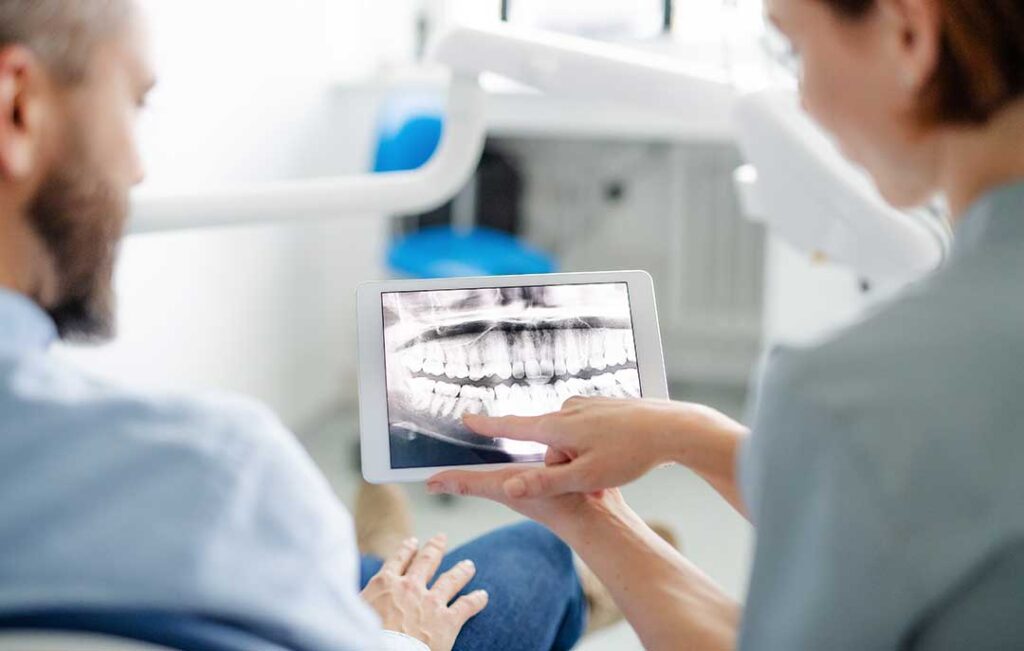
A dental examination may include checking the bite, testing sensitivity, examining the gums, and taking an X-ray if the fracture is deep or the injury involved a significant impact.
What should parents know about a child’s broken tooth?
Children may chip a baby tooth during play, sports, a fall, or an accident involving playground equipment. A baby tooth should still be evaluated if it is painful, loose, pushed out of position, or associated with gum bleeding or swelling. Damage to a baby tooth can sometimes affect the developing permanent tooth beneath it.
For a child in Cheshire, outdoor activities and winter conditions can create different injury risks throughout the year. Hard ground, icy surfaces, bicycles, recreational equipment, and contact sports can all contribute to dental injuries. A properly fitted mouthguard is especially useful during activities where falls or facial contact are possible.
Keep the child calm, rinse the mouth gently, and use a cold compress for swelling. Do not force a loose baby tooth back into place.
Can a broken tooth wait until the next day?
It depends on the symptoms. A painless, small chip with no swelling or looseness may be able to wait for a routine dental evaluation. Severe pain, a visible nerve, ongoing bleeding, facial swelling, a loose tooth, or a tooth displaced by an injury should be addressed more quickly.
Even when immediate treatment is not required, avoid treating the tooth as normal. A temporary sharp edge can injure the tongue, and continued chewing can turn a small fracture into a larger one. Soft foods, gentle brushing, and avoiding the affected side can help protect the area while waiting for care.
A broken tooth is rarely something to repair at home. Prompt attention is particularly important after a fall, collision, or other facial impact because the injury may involve more than the visible chip.